

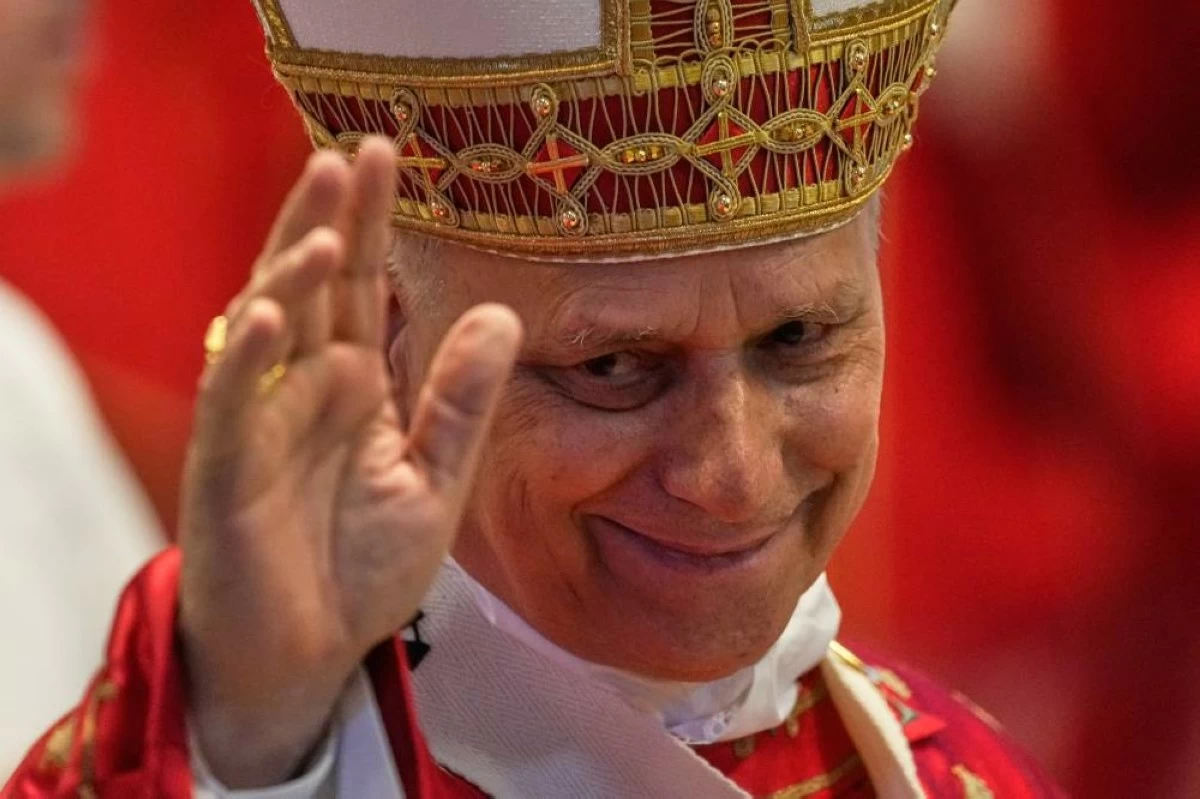
Vatican City: Pope Leo XIV on Monday called for robust regulation of artificial intelligence and urged developers to work for the common good rather than profit, issuing a sweeping manifesto on safeguarding humanity as the technology reshapes everything from work to warfare.
“Magnifica Humanitas” (Magnificent Humanity), Leo’s first encyclical, has been eagerly awaited since history’s first US-born pope announced shortly after his election that he considers AI the greatest challenge facing humanity today.
In the document, Leo criticised the “culture of power” driving the AI race, particularly in the development of increasingly sophisticated methods of remote warfare. He declared it “not permissible” to entrust irreversible, lethal decisions to AI systems, setting up another point of tension between the American pope and the Trump administration, which has pursued aggressive deregulation of AI development.
Experts in the technology sector, academia and Catholic moral theology said the document is likely to become a benchmark in the global debate on AI, serving as a reference for policymakers, researchers and the wider public. It comes amid rapid advancements in the technology, which are fuelling concerns about job displacement and even the erosion of human intelligence.
“It lends itself to people who are at the forefront of these tools and able to see the incredible things they can do, to ask themselves, ‘What does it mean to be human?’” said Taylor Black, a Microsoft AI executive and director of the Catholic University of America’s AI institute.
The pope was due to present the document at a Vatican launch on Monday featuring a co-founder of Anthropic, a company currently engaged in a legal dispute with the Trump administration over access to its AI technology. The Vatican has involved Anthropic as part of its decade-long effort to engage Silicon Valley in dialogue on the human impact of AI.
However, in the text, Leo repeatedly warned about the concentration of power and data in the hands of a few private sector actors, describing it as a risk, particularly for children and vulnerable populations. He called for external regulation of their work.
“It is not enough to invoke ethics in the abstract; robust legal frameworks, independent oversight, informed users, and a political system that does not abdicate its responsibility are required,” he wrote. “A more moral AI is not enough if that morality is determined by a few.”
Leo repeatedly urged AI developers and political leaders to slow down and reflect on their actions, encouraging them to use ethical and spiritual principles to prioritise the betterment of humanity over profit or power.
AI companies such as OpenAI and Anthropic are among the most valuable private firms in the United States, each worth hundreds of billions of dollars – exceeding the GDP of many countries.
In a systematic text, the mathematically trained pope traced the history of Catholic social teaching and applied its core principles – justice, solidarity, the dignity of work and the universal destination of resources – to the digital revolution.
“I am convinced that this will prove to be a defining document for our era, a profound and prophetic one,” said Paolo Carozza, a law professor at Notre Dame Law School and chair of Meta’s oversight board.
“Pope Leo is offering a clear, comprehensive and coherent voice, urging us to take responsibility for building a world in which technology serves humanity rather than diminishes it,” he added.
In some of its strongest passages, Leo condemned how AI has contributed to the “normalisation of war” by desensitising people to its human cost. While not naming specific conflicts, he referred to “opposing imperialisms, between powers that seek to preserve their supremacy and those that aspire to seize it”.
He called for greater transparency and accountability from AI developers, ensuring that decision-making chains in AI-assisted military actions are always identifiable. He also stated that the Catholic Church’s “just war” theory is now “outdated” in light of modern technological warfare.
Leo signed the encyclical on 15 May, marking the 135th anniversary of “Rerum Novarum” (Of New Things), the landmark teaching of Pope Leo XIII on workers’ rights, the limits of capitalism and the responsibilities of states and employers during the Industrial Revolution.
That document laid the foundation of modern Catholic social teaching. The current pope referenced it at the beginning of his pontificate in relation to the AI revolution, which he believes raises similar existential questions. “Magnifica Humanitas” thus becomes the latest chapter in a long tradition of adapting Church teaching to contemporary social challenges.
AI is currently generating both existential fears and utopian visions, as debate intensifies over whether it will enrich humanity or erode human intelligence while eliminating millions of high-paying jobs.
“The pursuit of greater profits cannot justify choices that systematically sacrifice jobs, because the human person is an end, not a means, and the economic order must remain subordinate to human dignity and the common good,” Leo wrote.
Extending his focus on human dignity in labour, Leo also issued the first papal apology for the Holy See’s role in legitimising slavery.
While previous popes have apologised for Christians’ involvement in the transatlantic slave trade, none had publicly acknowledged or apologised for the role played by the papacy in granting European rulers authority to subjugate and enslave non-Christians.
Vatican officials declined to identify contributors to the encyclical, though Church representatives have been engaging with Silicon Valley firms for more than a decade. Toward the end of his pontificate, Pope Francis had also begun speaking more forcefully about AI and its risks.
The inclusion of Anthropic at the Vatican launch drew criticism from some observers, who viewed it as an implicit endorsement.
In February, the Trump administration ordered all US agencies to stop using Anthropic’s technology after the company declined to grant unrestricted access to the US military. Anthropic, which emphasises safety and risk mitigation, is currently challenging the decision in court.
Brian Boyd, US faith liaison for the non-profit Future of Life Institute, said the Vatican’s engagement should not be seen as endorsement.
“I think it is more a recognition of how this is an extremely powerful company leading the race to replace human labour,” Boyd said.
He added that while Anthropic carries significant responsibility, it has also “demonstrated genuine goodwill, integrity and a willingness to engage in dialogue.”