

World
There is currently no approved vaccine or treatment for this strain.
By WAM Published: 2026-06-02T05:33:00+04:00 2 min read
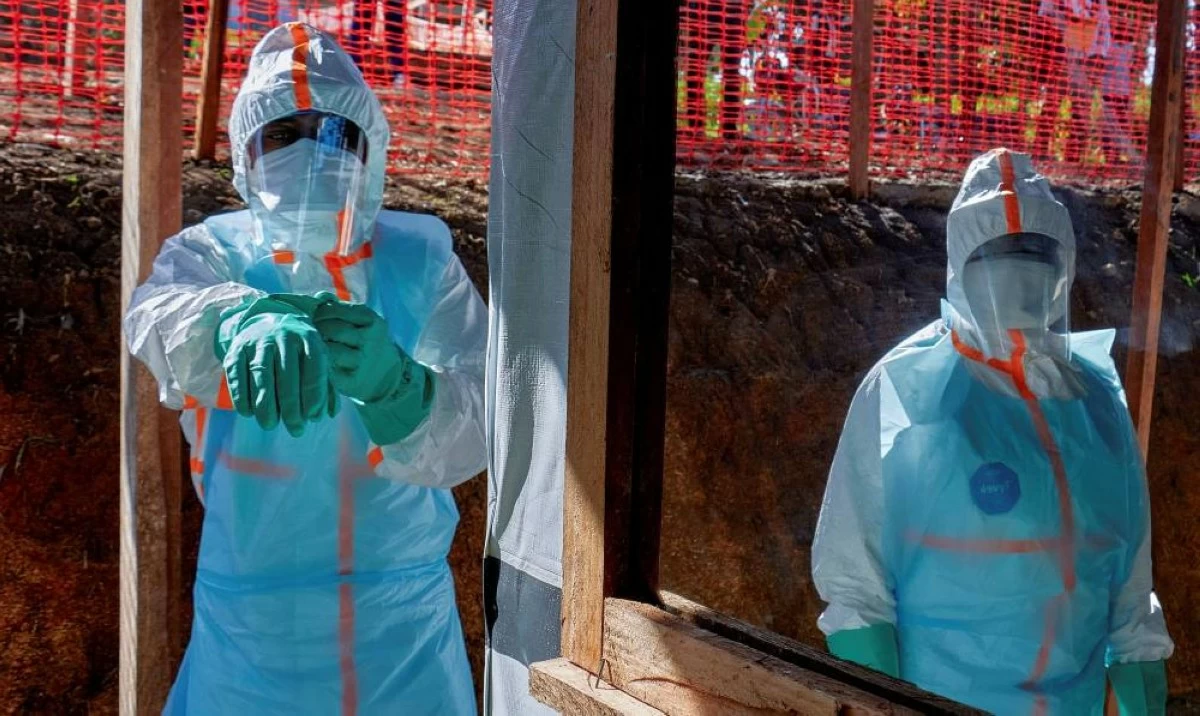
In this file photo, health workers get dressed in personal protective equipment (PPE) at the Evangelical Medical Center, in Bunia, Ituri province, Democratic Republic of Congo. Picture credit: Reuters
Geneva: International organisations on Monday announced intensified efforts to respond urgently to the Ebola outbreak in the Democratic Republic of the Congo and Uganda, while accelerating the development of an effective vaccine against the circulating Bundibugyo strain.
The outbreak, which has so far caused around 250 deaths and more than 1,100 confirmed cases, has prompted scientists and international health organisations to race against time to develop a vaccine that can be produced rapidly and tested in affected African regions. There is currently no approved vaccine or treatment for this strain.
The World Health Organisation (WHO) said the vaccine closest to readiness is the single-dose rVSV vaccine developed by the International AIDS Vaccine Initiative (IAVI), which is based on the same technology used to develop Ervebo, the licensed vaccine against the more widespread Zaire strain of the Ebola virus.
IAVI also announced on Monday that it had reached an agreement with the University of Texas Medical Branch to further develop the vaccine.
The WHO estimated that it will take between seven and nine months before the rVSV vaccine targeting the Bundibugyo strain is ready for human clinical trials.
In the same context, the Coalition for Epidemic Preparedness Innovations (CEPI) announced funding aimed at accelerating the development of three vaccine candidates against the Bundibugyo strain, including the rVSV vaccine. WHO Director-General Tedros Adhanom Ghebreyesus described the move as an important step forward in combating the outbreak.
The funding will also support the development of another vaccine at the University of Oxford, which previously contributed to the development of the AstraZeneca COVID-19 vaccine. According to the WHO, this vaccine, to be manufactured by the Serum Institute of India, the world's largest vaccine producer, could be ready for clinical trials within two to three months.
The third vaccine candidate eligible for funding is being developed by the US biotechnology company Moderna and is based on messenger RNA (mRNA) technology.